.svg)
.svg)
.svg)


.svg)

.svg)

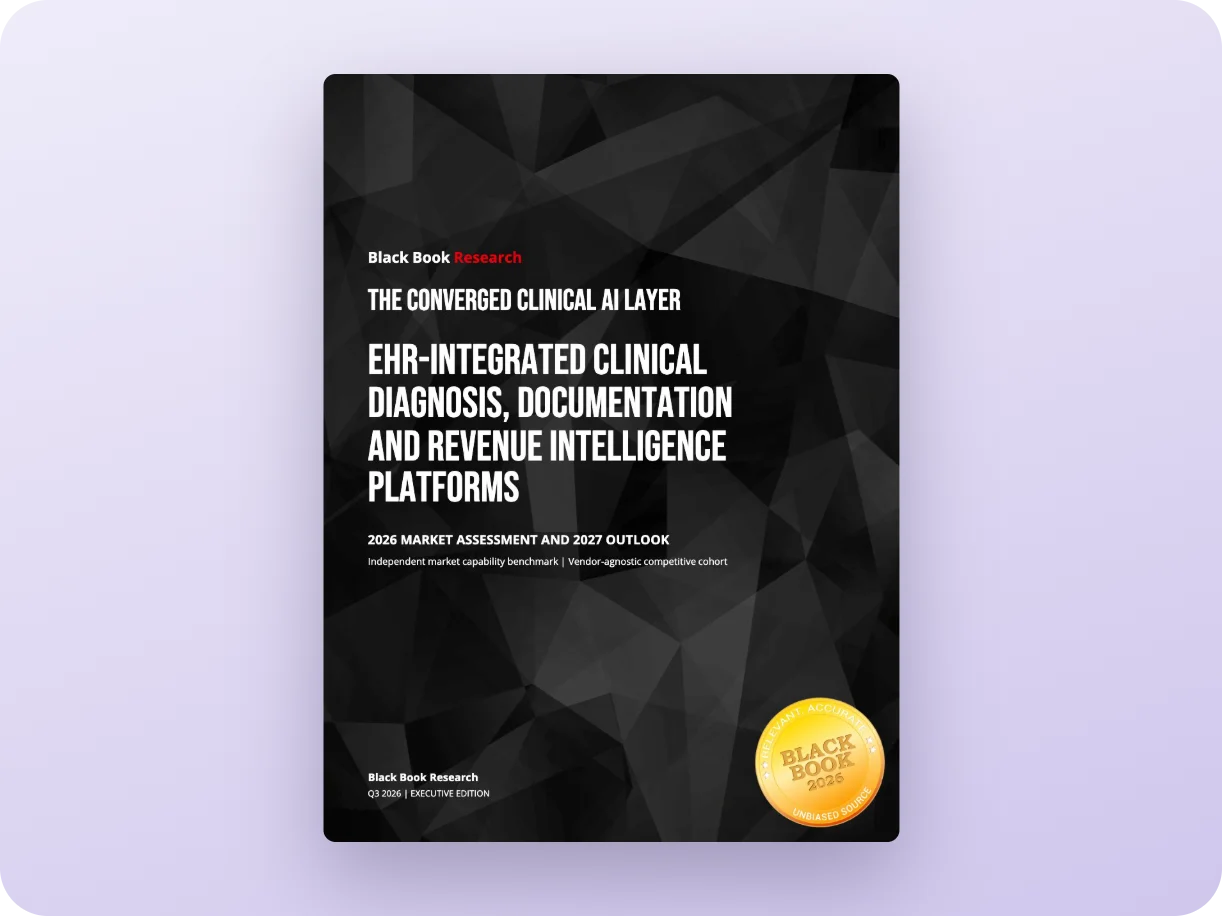
If you haven't heard the term converged clinical AI layer yet, you will soon. Black Book Research introduced it as a new market category in a recent report, The Converged Clinical AI Layer, which evaluates platforms that combine diagnosis support, documentation and revenue intelligence inside the EHR. Many of the ambient, CDI and revenue cycle vendors health systems already buy from are building toward it.
A converged clinical AI layer is a single platform inside the EHR that reads the full patient record, identifies the diagnoses the chart supports, and drafts the documentation. Every diagnosis it recommends comes with the labs, notes, and results that support it. That supporting evidence stays attached as the diagnosis moves through CDI, coding and denial prevention.
What an ambient scribe misses
Ambient scribes are the AI tool most health systems already use, and they do their core job well: they listen to the encounter and write the note. Many also include coding tools that surface ICD-10 codes from the conversation, which makes them especially strong in the outpatient setting.
Their limit is where they look. A scribe is anchored to the encounter, so it works from what was said in the room, with no view of the patient's history, trends or prior results. It can capture a specific ICD-10 code when a condition comes up in the encounter. However, it's thin on the clinical reasoning behind that code and on MEAT criteria (monitor, evaluate, assess, treat), which show a condition was addressed. Scribes are built to record, so a diagnosis buried in the chart stays out of the note.
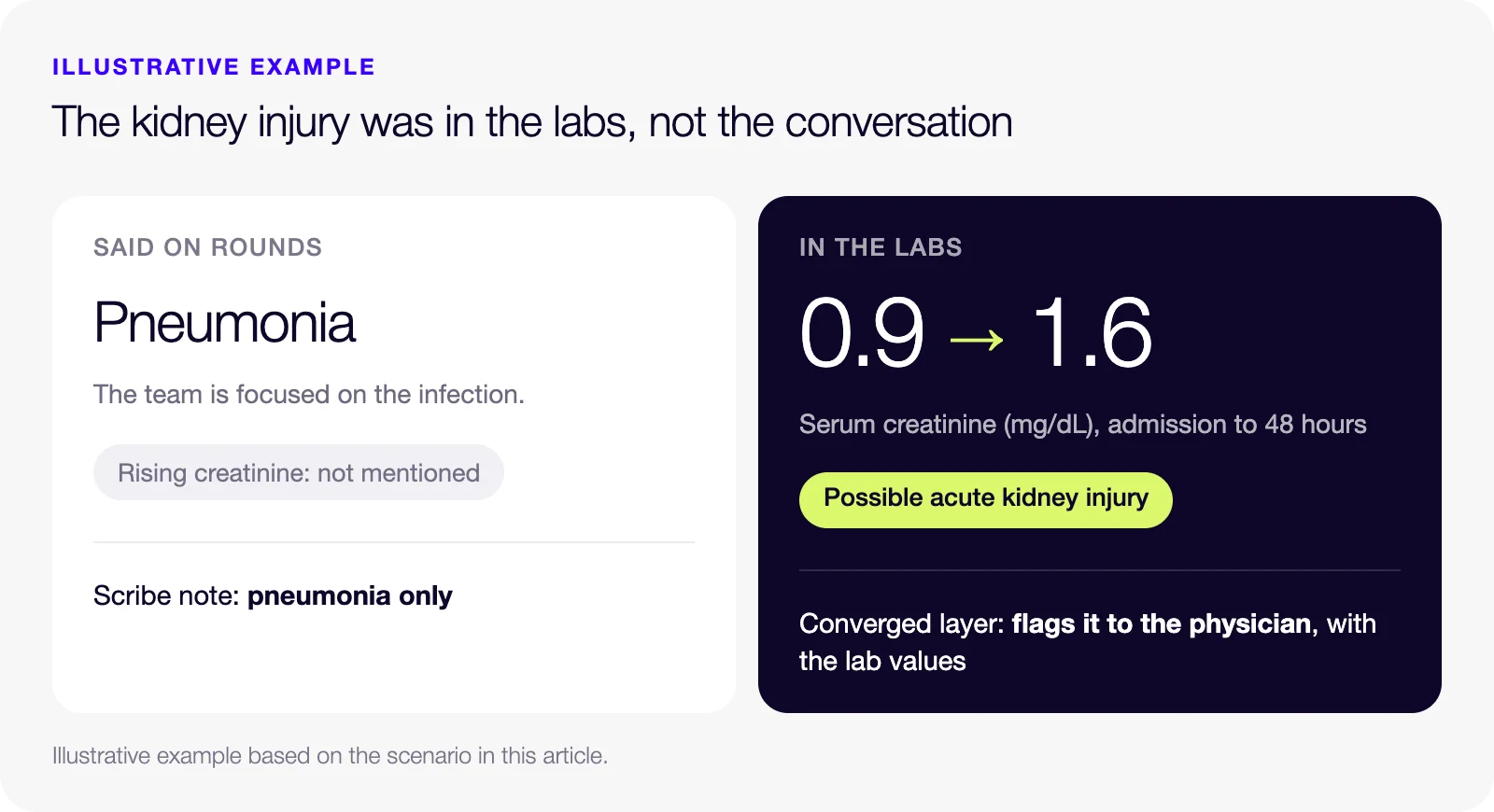
That gap shows up in every care setting, and it's easiest to see in the hospital, where much of what matters happens between conversations. Let's say a patient is admitted with pneumonia. Over the next 48 hours, her creatinine rises from 0.9 to 1.6. Nobody mentions it on rounds because the team is focused on the infection, so the scribe has nothing to record.
The scribe note misses acute kidney injury while the patient is getting treated for pneumonia, and the stay is coded as less severe than it was. The diagnosis was in the labs, but physicians see only about 3% of the data in a typical chart. A scribe isn't built to reason through a lab trend and flag it to the clinician, so the finding stays hidden.
In the best case, a CDI specialist catches the gap and sends a retrospective query. That asks the physician to recall a patient they saw weeks or even months ago, and a query that goes unanswered recovers nothing. The more serious cost is to the patient, whose kidney injury went unrecognized while they were still in the hospital.
A converged clinical AI layer reads the creatinine trend while the patient is still admitted. It flags possible acute kidney injury to the physician, along with the lab values behind it. If the physician agrees, the diagnosis goes into the note at the point of care.
Black Book's assessment describes the same shift in what buyers expect:
“Ambient documentation is becoming an entry capability rather than the category endpoint. Enterprise buyers increasingly expect chart context, diagnosis intelligence, evidence links and coding-aware documentation.”
— Black Book Research findings, p. 7
A converged layer works from the full record, including lab trends, medications, imaging and prior notes, rather than a single encounter. Where a scribe captures a code from the conversation, the converged layer shows the clinical evidence behind the diagnosis, which is what MEAT criteria and payer audits ask for.
By reasoning over the full record, technology like Regard's supports diagnosis, documentation, CDI, coding and payer evidence, in the inpatient setting and beyond. Clinicians and staff see its findings in the workflows they already use, and the clinician makes every decision.
Why health systems are making this decision now
The largest outside pressure pushing health systems towards technology that can clinically reason through vast swaths of medical record data is payers.
For years, the standard way to recover a missed diagnosis has been to find it after the fact, through CDI review or a query to the physician. Payers are now automating their own review, and scrutiny of coding intensity, HCC capture and AI-supported documentation is expected to grow. Documentation errors already account for roughly two-thirds of the $28.8 billion in improper Medicare payments identified in CMS's latest error-rate review. Under that kind of review, the diagnoses most at risk are the ones without clinical evidence behind them.

A diagnosis the physician confirmed during the stay, supported by the right documentation, is much harder to deny than one added weeks later through a query. When that evidence follows the diagnosis into the note, the code and the claim, an auditor can see why it's there.
The decision moves to the enterprise
Most health systems built their AI stack one department at a time. Physicians got an ambient scribe to cut documentation time, and CDI got software to close documentation gaps. Coding and revenue cycle added tools that act as a fail-safe, catching codes that may have been missed. Each product reads the same chart separately, and each comes with its own contract, integration, implementation and governance review.
Until now, each leader chose the best tool for their own team. A converged layer replaces that with one choice: which platform reads the chart for everyone. Every downstream workflow depends on what that platform finds, so CMIO, CDI and revenue cycle leaders have to make the decision together. They already share the cost of getting it wrong. A diagnosis missed at the point of care becomes a gap in the note, then a query, then a denial.
Ambient documentation solved the note burden, and health systems should keep it. The next decision is which platform reasons through the rest of the record and holds up in inpatient care, where the chart is most complex. That choice shapes every note, code and claim that follows.
How Black Book Research defines the category, and where Regard ranked
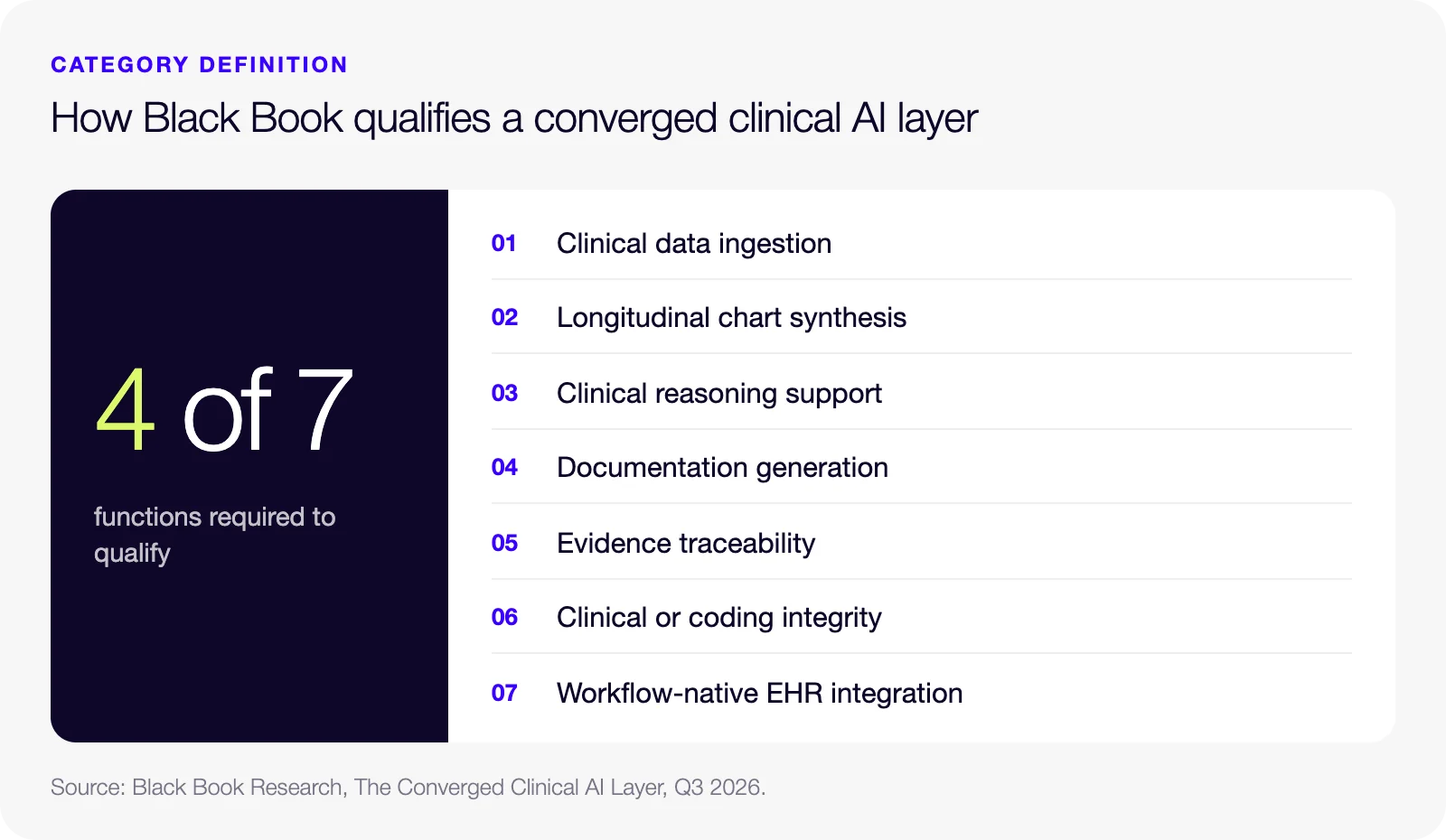
Black Book Research named this category in its Q3 2026 assessment, The Converged Clinical AI Layer. The formal name is “EHR-integrated clinical diagnosis, documentation and revenue intelligence platforms.” To qualify, a platform must perform at least four of seven functions, including longitudinal chart review, diagnosis support, evidence traceability and EHR workflow integration. The 2027 outlook and payer trends described above come from the same report.
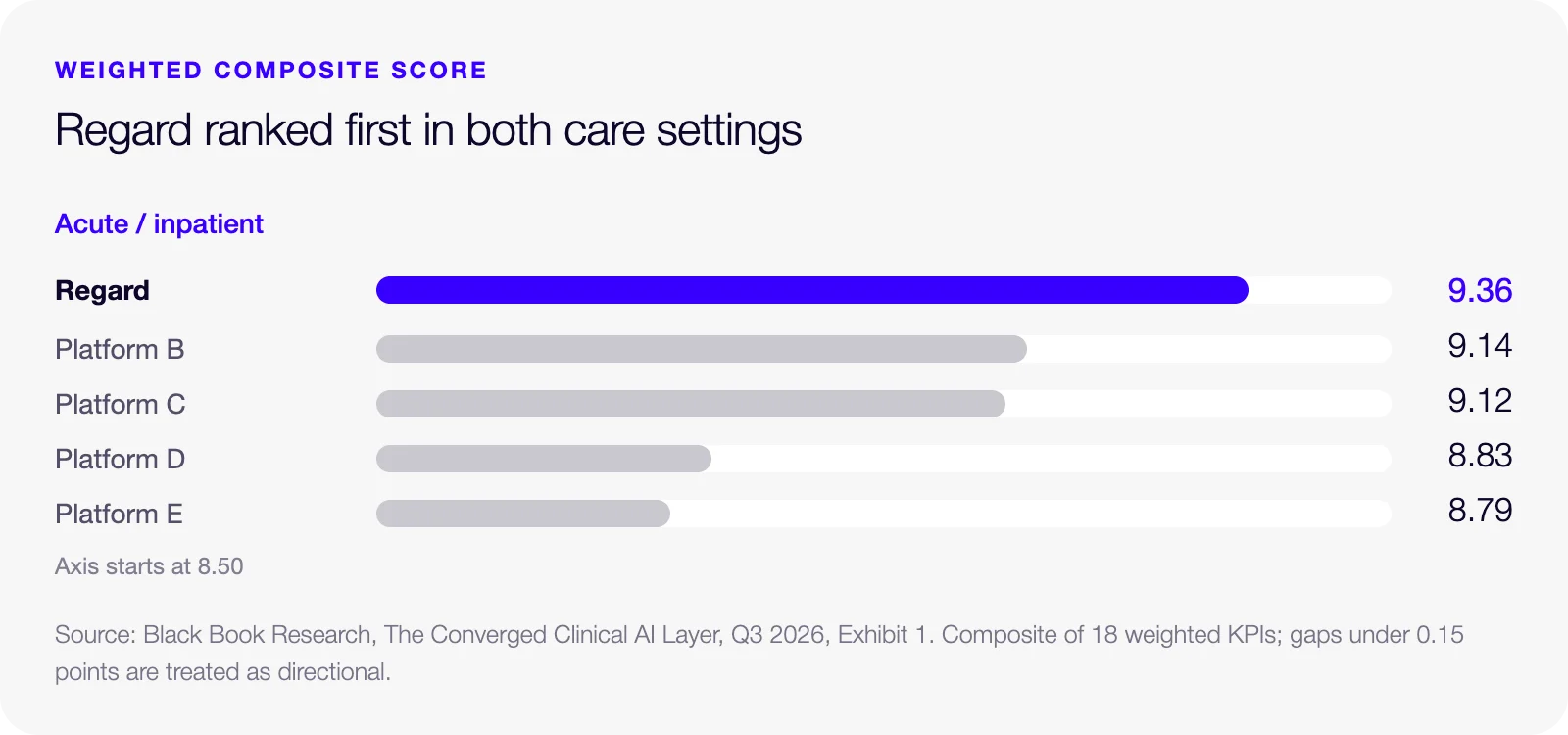
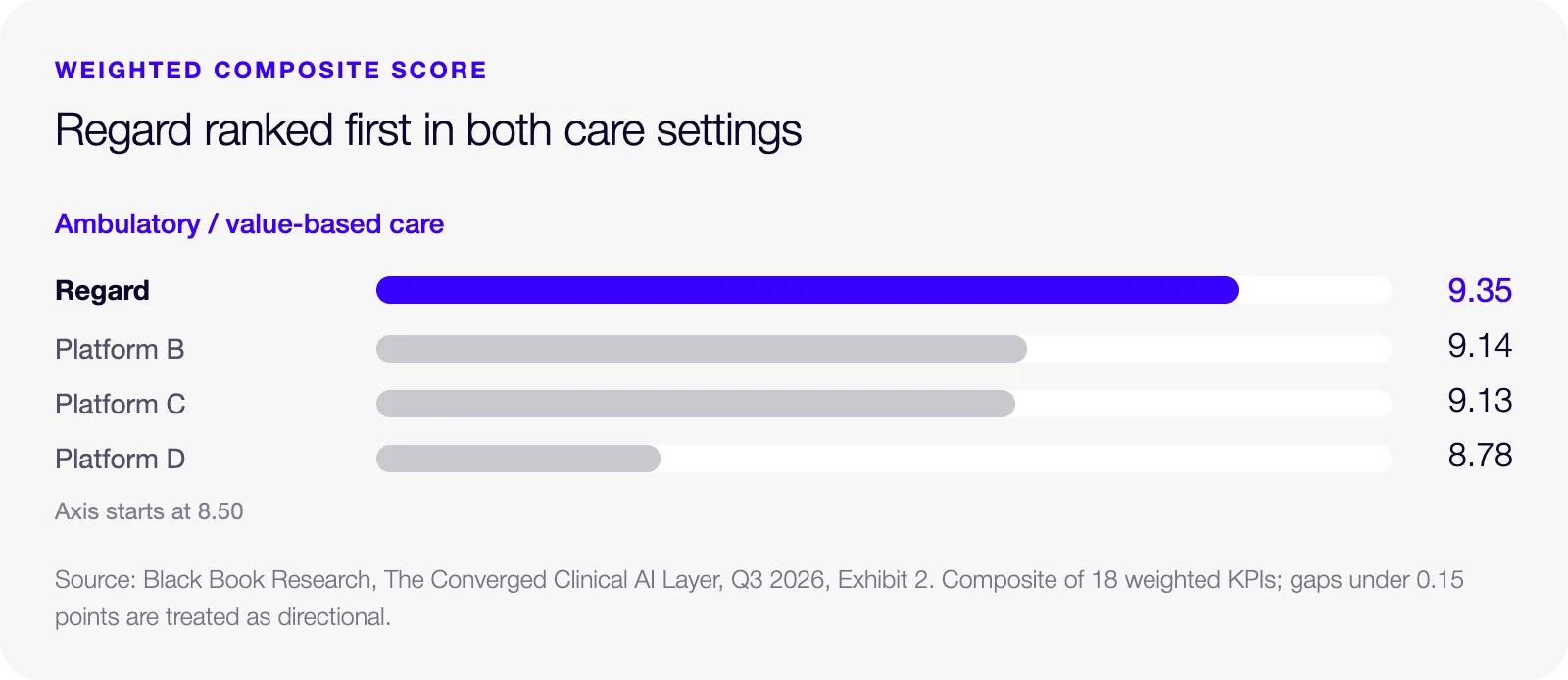
Regard ranked first in both care settings Black Book evaluated. It scored 9.36 in acute care and 9.35 in ambulatory, against 9.14 for second place in each. Black Book treats gaps under 0.15 points as directional, and Regard's lead clears that bar in both settings.
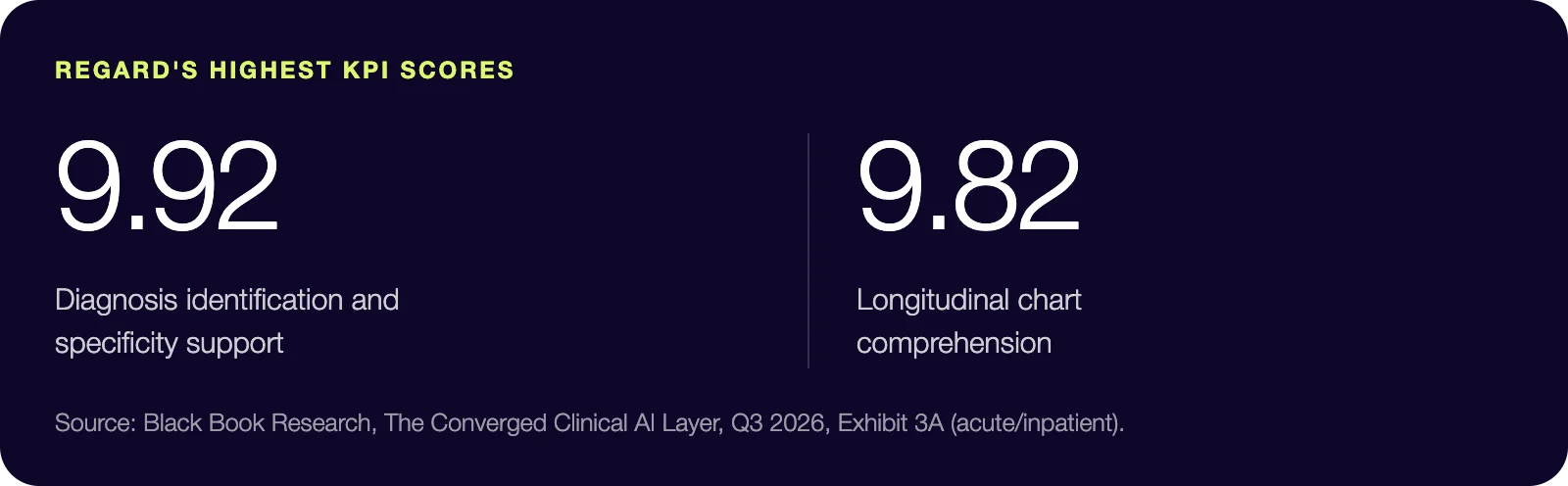
Regard's highest scores came in diagnosis identification and specificity (9.92) and longitudinal chart comprehension (9.82). Those are the two capabilities that support world-class patient care and alleviate clinician burden, especially in the difficult to navigate inpatient care setting.
Scores are Black Book comparative capability ratings based on documented product functions, integrations, provider case studies, regulatory materials and published research through July 30, 2026.
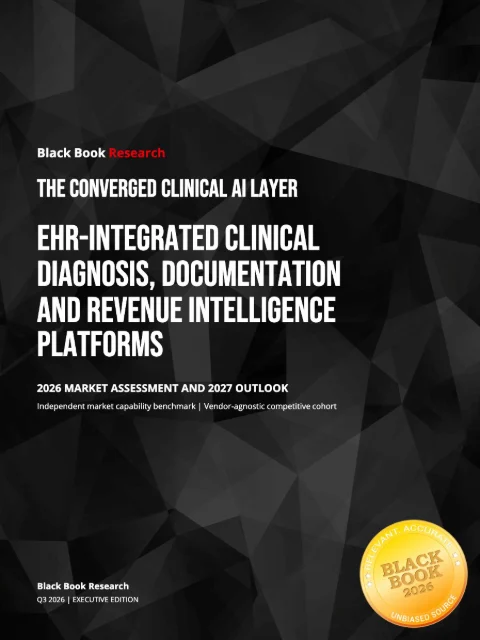
Black Book Research's Q3 2026 assessment of EHR-integrated clinical AI platforms.
Download the reportFrequently asked questions (FAQ)
What is a converged clinical AI layer?
A converged clinical AI layer is a term coined by Black Book Research in their August 2026 market report. It is a single platform inside the EHR that reads the full patient record, identifies the diagnoses the chart supports, and drafts the documentation. Every diagnosis it recommends comes with the labs, notes and results that support it. That evidence stays attached as the diagnosis moves through CDI, coding and denial prevention. Regard is a diagnostic intelligence platform that was evaluated in Black Book’s findings.
How is a converged clinical AI layer different from an ambient scribe?
An ambient scribe listens to the patient encounter and writes the note, and many also surface ICD-10 codes from the conversation. A converged clinical AI layer works from the full patient record, including lab trends, medications, imaging and prior notes. That lets it identify diagnoses the conversation never raised and show the clinical evidence behind them, which is especially critical for the team-based workflows in the inpatient care setting.
How does converged clinical AI help prevent denials?
A converged clinical AI layer identifies diagnoses while the patient is still in care and links each one to patient-specific evidence, such as a lab trend or imaging result. A diagnosis the physician confirms at the point of care, with that evidence attached through the note, code and claim, is harder for a payer to deny than one added weeks later through a retrospective query.
Who ranked #1 in Black Book's converged clinical AI assessment?
Regard ranked first in both care settings in Black Book Research's Q3 2026 assessment, The Converged Clinical AI Layer. It scored 9.36 in acute/inpatient care and 9.35 in ambulatory/value-based care. Its highest scores came in diagnosis identification and specificity (9.92) and longitudinal chart comprehension (9.82).
How does Black Book define the converged clinical AI category?
Black Book defines the category as EHR-integrated clinical diagnosis, documentation and revenue intelligence platforms. To qualify, a platform must perform at least four of seven functions: clinical data ingestion, longitudinal chart synthesis, clinical reasoning support, documentation generation, evidence traceability, clinical or coding integrity, and EHR workflow integration.