For years, a quiet but serious problem has been growing inside hospitals: we’re generating more clinical data than any human could reasonably review, and our documentation systems simply aren’t built for the volume.
Clinicians are doing their best with what they have — jumping between tabs, searching through years of notes, and piecing together a patient’s story while juggling already demanding workloads. Most can only process a tiny fraction of what’s in the EHR during a shift. The result is predictable and less than ideal: documentation becomes reactive, pieced together from memory and scattered chart searches rather than built from a complete clinical picture, with heavy reliance on copy-and-paste. First, let’s examine why reactive documentation fails so consistently, and what that means for patient care.
The problem with reactive documentation
In a reactive model, notes are written after the fact. Documentation is driven by events,
questions, or pressure rather than clinical necessity or patient care. It is written to defend
decisions rather than explain reasoning. Information gets lost or buried. Revenue leakage and compliance issues slip through. Most importantly, the note stops telling the patient’s story.
This was a pattern I encountered daily: clinicians scrolling through long timelines to find a
buried risk factor from three admissions ago or a single relevant note. Handoffs felt fragile. Documentation felt more like a task than a reflection of judgment.
And the most painful part? We had access to more data than ever but were using hardly any of it.
We needed something different: a way to make documentation reflect clinical thinking again, not just requirements.
Proactive Documentation is the solution
When I saw Regard’s Proactive Documentation model previewed at the Society of Hospital Medicine conference in 2024, it resonated immediately. Instead of asking clinicians to reconstruct a patient’s story after the encounter, the system brings their history and all critical context forward before you even start writing.
It aligned with how I wanted documentation to feel: clear, intuitive, and rooted in clinical
thinking. With support from our leadership group, we started with a focused rollout, inviting a handful of clinicians to try the workflow and help shape its implementation across the hospitalist service.
How to implement Proactive Documentation, and what actually works
Shifting behavior around something as sensitive as documentation requires trust, clarity, and a workflow clinicians feel good about. But before diving into how to pull it off, let’s be clear about what changes when documentation becomes proactive rather than reactive.
Better care: Documentation ensures key details are always visible, making handoffs more reliable and providing clinicians with a clear sense of patient acuity. This directly supports safer care and more confident transitions between providers.
Operational gains: With notes that are consistent and intentional, documentation always matches the care delivered. This improves revenue integrity and reduces preventable delays by making the connection between care and documentation clear.
Improvements in clinician well-being: This might be the most meaningful shift. Hospitalists who routinely stay hours past their shifts finish on time. Skeptical department leaders become advocates. Notes become clearer and less redundant. Covering physicians no longer need to reconstruct thought processes. There is reduced variability in care. Clarifying documentation brings a sense of calm back to the workday. When clinicians aren’t buried in the chart, they think more clearly — and patients feel the difference.
Proactive documentation ultimately changed three fundamentals for us:
- Visibility — the full clinical picture surfaced before we wrote a word.
- Accuracy — diagnoses, history, and risk factors arrived organized and supported.
- Flow — notes began to align with clinical thinking rather than EHR structure.
Clinicians now start with a structured draft based on the entire chart and use Max, Regard’s AI assistant, to validate findings or ask follow-up questions in real time. It makes the record work for clinicians, rather than the other way around.
And that’s what finally breaks the cycle of reactive documentation.
The implementation framework
Lead with clinical reasoning, not technology.
Ground the conversation in clinical thinking. Documentation should reflect how clinicians
actually reason through cases. Shorter notes, clearer assessments, and an emphasis on clinical judgment help everyone see that proactive documentation isn’t replacing their expertise — it’s supporting it. Start by asking: Does this make the clinical story clearer? If the answer is no, the technology doesn’t matter.
Bring stakeholders in early.
Involve the clinicians who will use the tool from day one. They need to test it, challenge it, and identify how it fits into existing routines. This isn’t about selling them on a finished product —it’s about demonstrating value in their actual workflow before asking for full adoption. The clinicians using the system every day understand the friction points better than anyone else.
Create quick feedback loops.
Aim for progress, not perfection. What helped? What didn’t? What needs refining? This
openness to feedback keeps momentum strong and gives clinicians a sense of ownership in the process. Speed matters here — a small improvement this week beats a perfect solution down the road.
Measure clarity, not speed.
The goal shouldn’t be to shave minutes off documentation. It should be to make notes easier to read, safer to hand off, and more centered around the patient’s full story. Once clinicians feel that shift in clarity, adoption follows naturally. Ask: Are handoffs smoother? Does the chart more closely detail the care provided? Do clinicians feel more confident in their notes? These are the metrics that matter. And when these metrics are achieved, others follow naturally.
The core principles
These are the fundamentals to remember.
– Make the important information visible. Clinicians think better when the full picture is
right in front of them.
– Augment clinical judgment. Tools should organize information and surface insights, not
dictate conclusions. Clinical reasoning belongs to the clinician.
– Keep it simple. Every extra click or new window is a barrier. Burying critical details
three clicks deep or across multiple screens fragments clinical judgement.
– Treat documentation as part of patient care. When the note reflects true clinical
thinking, the entire team benefits.
– Start small and iterate. Trust grows when clinicians experience improvement firsthand.
From data to wisdom
Proactive Documentation does more than improve notes. It changes how we understand, communicate, and act on patient stories.
Patient data will only keep growing, and we can’t rely on memory or a patchwork of systems to provide safe care. We need systems that bring the right information into view at the right moment and allow room for clinicians to apply their judgment with clarity.
That’s what Proactive Documentation offers: a path from data to wisdom, and a more human-focused way to practice medicine.
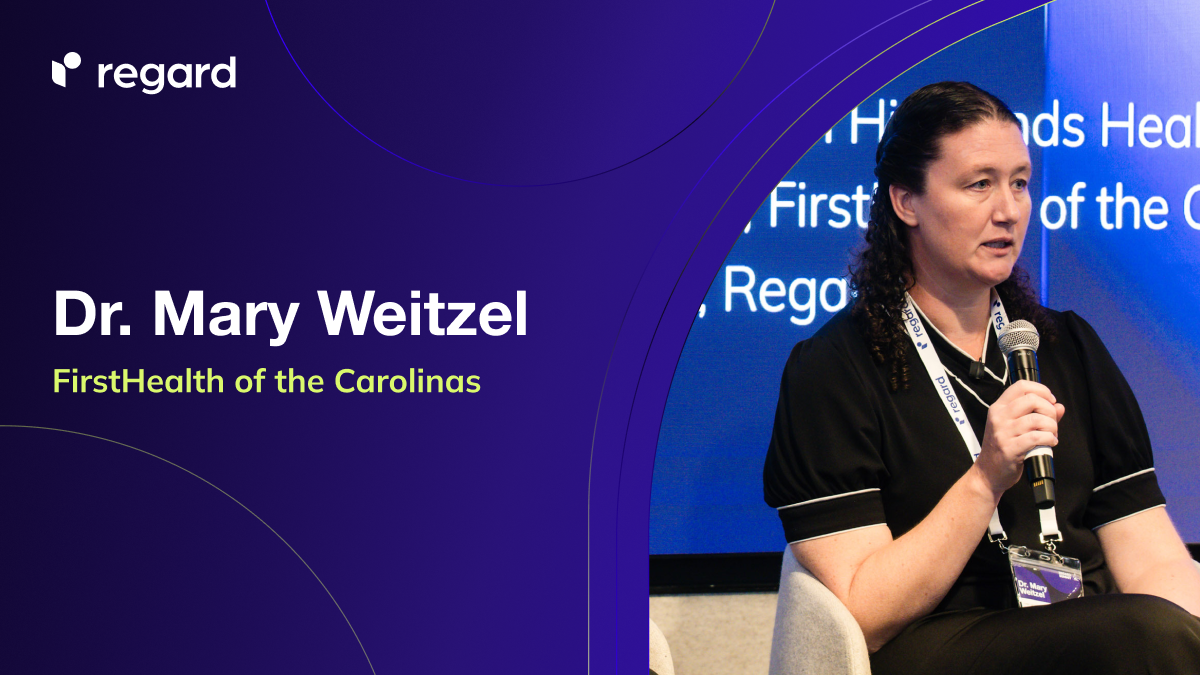
By Dr. Mary Weitzel